IMU CET Course Options Explained: DNS, B.Sc Nautical Science, Marine Engineering & More
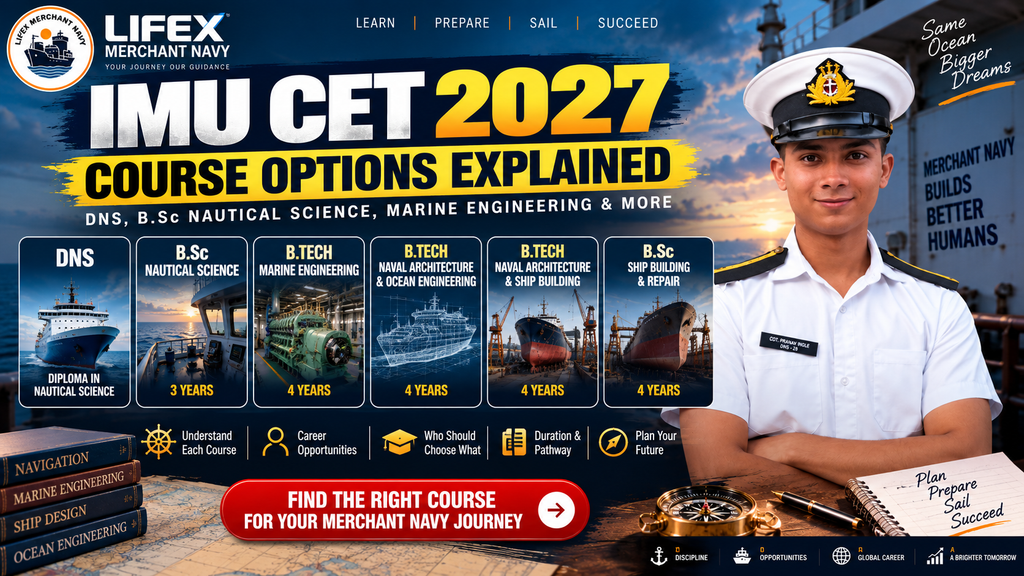
If you’re searching for IMU CET course options, you may already know that IMU CET is an important entrance route for several maritime programmes. But the bigger question is: Which course should you choose after 12th? Should you go for DNS? B.Sc Nautical Science? B.Tech Marine Engineering? Naval Architecture? Ship Building? These courses can lead to very different career paths. Some are designed for students who want to work as deck officers on ships, while others prepare students for marine engineering, ship design, shipbuilding and maritime technical careers. In this guide, we’ll explain the major IMU CET course options after 12th, what each course is about, how long it takes, who should choose it, and how the career path differs. Important: The official IMU CET 2027 prospectus has not been released yet. The course information below is based on the latest official IMU information available for the 2026–27 admission cycle. Final 2027 eligibility, admission rules and course availability should be checked from the official IMU prospectus when released. What Are the Course Options Through IMU CET? For students coming from Class 12 with PCM, the major IMU-related options include: IMU also offers other undergraduate programmes such as BBA programmes in maritime logistics, but students interested specifically in the Merchant Navy sailing route usually focus more on DNS, B.Sc Nautical Science and B.Tech Marine Engineering. So before choosing a course, first decide what kind of career you actually want. Which IMU CET Course Is Best After 12th? There is no single “best” IMU CET course for every student. The right course depends on the career you want. Course Duration Main Career Direction DNS 1 Year Deck Officer / Merchant Navy B.Sc Nautical Science 3 Years Deck Officer / Merchant Navy B.Tech Marine Engineering 4 Years Marine Engineer / Engine Department B.Tech Naval Architecture & Ocean Engineering 4 Years Ship Design / Naval Architecture / Marine Industry B.Tech Naval Architecture & Ship Building 4 Years Ship Design / Shipbuilding / Marine Industry B.Sc Ship Building & Repair 3 Years Shipbuilding & Repair The important thing is that DNS and B.Sc Nautical Science are deck-side programmes, while B.Tech Marine Engineering is an engine-side programme. That difference should be clear before you fill out an application. What Is DNS in Merchant Navy? DNS stands for Diploma in Nautical Science. It is a 1-year residential programme leading to B.Sc. (Applied Nautical Science). IMU describes DNS as a programme covering marine navigation, seamanship and safety management, with the pathway leading towards the examinations required for a Certificate of Competency as a deck officer. For a student who wants to become a deck officer in the Merchant Navy, DNS is one of the major routes to consider. DNS at a glance Duration: 1 year residential programme Field: Nautical Science / Deck Department Focus: Navigation, seamanship, safety and shipboard operations Career direction: Deck Officer Academic route: DNS leading to B.Sc. Applied Nautical Science The DNS route can be attractive to students who want to enter the professional deck pathway through a relatively short academic programme before moving into the required sea-going training and certification pathway. What Is B.Sc Nautical Science? B.Sc Nautical Science is a 3-year residential undergraduate programme designed for students interested in the nautical/deck side of the Merchant Navy. The programme covers areas related to navigation, ship operations, safety and nautical studies. According to the latest IMU prospectus, admission to B.Sc Nautical Science is through IMU CET, and a valid IMU CET rank is required. The latest eligibility criteria include 10+2/equivalent with a minimum 60% average in PCM and at least 50% in English in 10th or 12th, subject to the other applicable conditions. B.Sc Nautical Science at a glance Duration: 3 years Field: Nautical Science / Deck Department Focus: Navigation, ship operations, safety and nautical subjects Career direction: Deck Officer Admission: IMU CET for the applicable admission cycle If you want a degree-based route in Nautical Science rather than the one-year DNS academic route, B.Sc Nautical Science is an option worth understanding. DNS vs B.Sc Nautical Science: What Is the Difference? This is one of the most common questions students ask. Both are connected with the deck side of the Merchant Navy, but their academic structure is different. Feature DNS B.Sc Nautical Science Duration 1 year 3 years Type Diploma leading to B.Sc Applied Nautical Science Degree Department Deck Deck Career Direction Deck Officer Deck Officer Residential Yes Yes IMU CET Applicable Applicable Main Focus Nautical training Nautical degree + training The choice shouldn’t be made simply because one course is shorter. You should consider the complete career pathway, training requirements, institute, sponsorship opportunities and your own long-term plans. What Is B.Tech Marine Engineering? If you don’t want to work in the deck department and are more interested in engines, machinery and technical systems, B.Tech Marine Engineering is the course you should understand. B.Tech Marine Engineering is a 4-year residential undergraduate programme. IMU describes the programme as focusing on marine machinery systems, marine engines, boilers, steam plants, marine simulators and other technical areas. Graduates can pursue careers as marine engineers on Indian and foreign-going ships. B.Tech Marine Engineering at a glance Duration: 4 years Field: Marine Engineering Department: Engine Department Focus: Engines, machinery, electrical/technical systems, maintenance and shipboard engineering Career Direction: Marine Engineer Admission: IMU CET for the applicable admission cycle For students who genuinely enjoy Physics, Mathematics, machines and technical problem-solving, this can be a strong career route. B.Sc Nautical Science vs Marine Engineering This is probably the most important comparison for a student interested in sailing. B.Sc Nautical Science B.Tech Marine Engineering Deck Department Engine Department Navigation-focused Machinery-focused Navigation & ship operations Engines & technical systems Deck Officer pathway Marine Engineer pathway 3 years 4 years More navigation/operations oriented More engineering/technical oriented Think about it this way: B.Sc Nautical Science → You learn how to navigate and operate the ship. Marine Engineering → You learn how the ship’s machinery and engineering systems work and are maintained. Neither is automatically “better.” They are