DNS vs B.Sc Nautical Science 2027: Which Is Better?
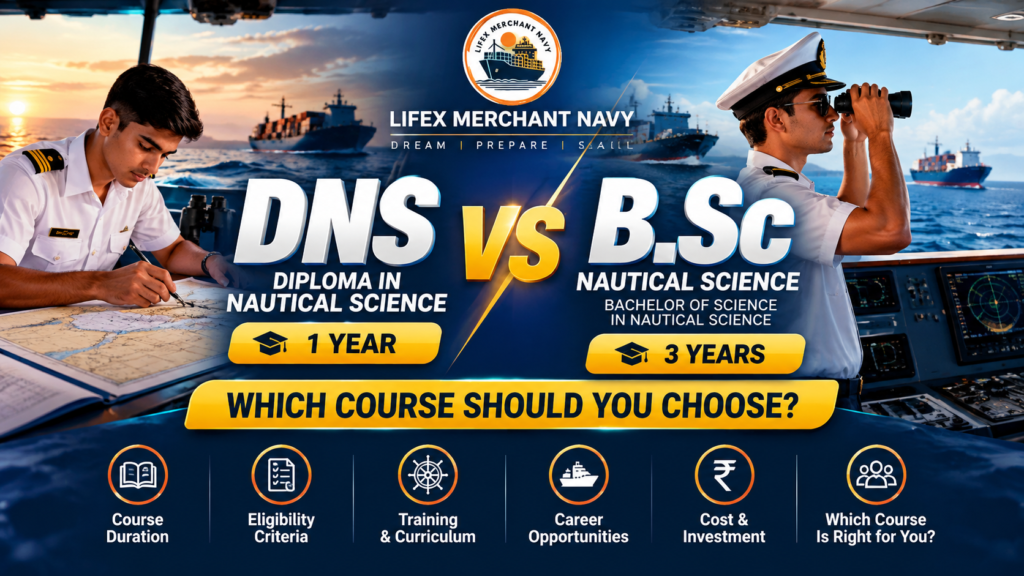
IMU CET 2027 | MERCHANT NAVY COURSE GUIDE DNS vs B.Sc Nautical Science 2027: Which Course Should You Choose? Confused between DNS and B.Sc Nautical Science after Class 12? Both courses can help you work towards a career in the deck department of the Merchant Navy, but they follow different academic and training pathways. Understanding these differences is important before you choose a course. DNS vs B.Sc Nautical Science 2027 | LifeX Merchant Navy Every year, thousands of students explore the Merchant Navy as a career option after Class 12. During their research, two courses frequently come up: Diploma in Nautical Science and B.Sc Nautical Science. Some students prefer DNS because the initial academic programme is shorter. Others prefer B.Sc Nautical Science because it offers a three-year undergraduate degree. However, choosing the right course involves more than comparing the number of years spent in college. You also need to understand sponsorship, sea training, medical requirements, professional certification and the total cost of the pathway. In this guide, we’ll compare both options so you can make a more informed decision for 2027. DNS vs B.Sc Nautical Science 2027: Quick Comparison Feature DNS B.Sc Nautical Science Full Form Diploma in Nautical Science Bachelor of Science in Nautical Science Initial Academic Duration 1 year 3 years Programme Type Residential diploma programme Residential undergraduate degree Career Direction Deck department Deck department Degree Pathway Progression towards B.Sc Applied Nautical Science B.Sc Nautical Science degree Entrance Examination IMU CET under applicable admission rules IMU CET under applicable admission rules Sponsorship Important for sponsored DNS admission routes Requirements depend on institute and recruitment route Sea Training Required for professional progression Required for professional progression Officer Certification Additional training and examinations required Additional training and examinations required Important for 2027 aspirants: This article uses the latest available IMU programme information and 2026-27 admission criteria. Always verify the final 2027 requirements from the official Indian Maritime University website before applying. What Is DNS in the Merchant Navy? DNS stands for Diploma in Nautical Science. It is a one-year residential academic programme designed for students interested in the deck department of merchant ships. Students learn subjects related to navigation, seamanship, maritime safety, cargo operations and shipboard responsibilities. The programme is part of a longer academic and professional pathway. Completing the one-year DNS course does not automatically qualify a student to work as a certified deck officer. Students must complete the applicable sea service, training requirements and competency examinations before progressing into officer roles. DNS Career Pathway After Class 12 Meet the applicable academic and medical eligibility. Qualify through the required admission and selection process. Complete the approved one-year DNS programme. Undertake the required shipboard training and sea service. Complete the applicable assessments and competency examinations. Progress through the deck officer certification pathway. The exact sequence and duration depend on the approved training scheme and regulations applicable at the time. What Is B.Sc Nautical Science? B.Sc Nautical Science is a three-year residential undergraduate degree programme focused on navigation, ship operations and maritime subjects. Students study areas such as navigation, ship stability, meteorology, cargo handling, maritime law and communication. The longer academic structure gives students more time in a formal college environment before they continue towards professional training and certification. Like DNS, a B.Sc Nautical Science degree alone does not automatically qualify a graduate as a certified navigating officer. B.Sc Nautical Science Career Pathway Meet the required academic and medical eligibility. Obtain the necessary entrance examination qualification. Complete the three-year B.Sc Nautical Science programme. Complete the required shipboard training and sea service. Pass applicable competency assessments and examinations. Qualify for the relevant deck officer certification. DNS vs B.Sc Nautical Science: Which Has Better Career Opportunities? Both programmes can form part of a career pathway in the deck department of merchant ships. Your long-term progression depends on more than the academic course you choose. Approved sea service, competency certificates, professional experience, performance and available opportunities all matter. Neither DNS nor B.Sc Nautical Science automatically guarantees a job, promotion or a particular salary. The better choice is the one that fits your circumstances and provides a clear, verified route through the required training stages. DNS vs B.Sc Nautical Science Sponsorship Requirements Sponsorship is one of the most important topics for students considering DNS. For sponsored DNS admission routes, a shipping company may conduct its own written assessment, interview, medical evaluation or other selection stages. The exact requirements can vary depending on the company, institute and admission cycle. Students should carefully read the terms of any sponsorship offer and understand how shipboard training will be arranged. For B.Sc Nautical Science, students should separately verify the college’s admission rules, training arrangements and recruitment support. Don’t confuse these terms: Sponsorship, college admission, placement assistance and guaranteed employment are not the same thing. Always verify the written conditions. DNS vs B.Sc Nautical Science Eligibility After Class 12 Under the standard 2026-27 IMU admission criteria, the Class 12 entry route for these programmes included a minimum average of 60% in Physics, Chemistry and Mathematics and at least 50% in English in Class 10 or 12. Candidates also needed to satisfy the applicable age, medical and other admission conditions. Category-based relaxations or alternative qualification routes may apply where specified in the official prospectus. Students appearing for Class 12 in 2027 should check the final prospectus before applying. Is 60% Overall Enough? Not necessarily. A minimum PCM average is different from your overall board percentage. For example, marks in English or an optional subject may improve your overall percentage without increasing your PCM average. Always calculate Physics, Chemistry and Mathematics marks separately. Medical and Eyesight Requirements Deck-side maritime careers have specific medical fitness standards, including requirements related to eyesight and colour perception. Before committing to a programme, check the latest requirements issued by the Directorate General of Shipping and consult an approved medical examiner where applicable. DNS vs B.Sc Nautical Science Fees: Which Costs More? A one-year academic programme may appear less expensive than a three-year degree, but the initial
IMU CET Course Options Explained: DNS, B.Sc Nautical Science, Marine Engineering & More
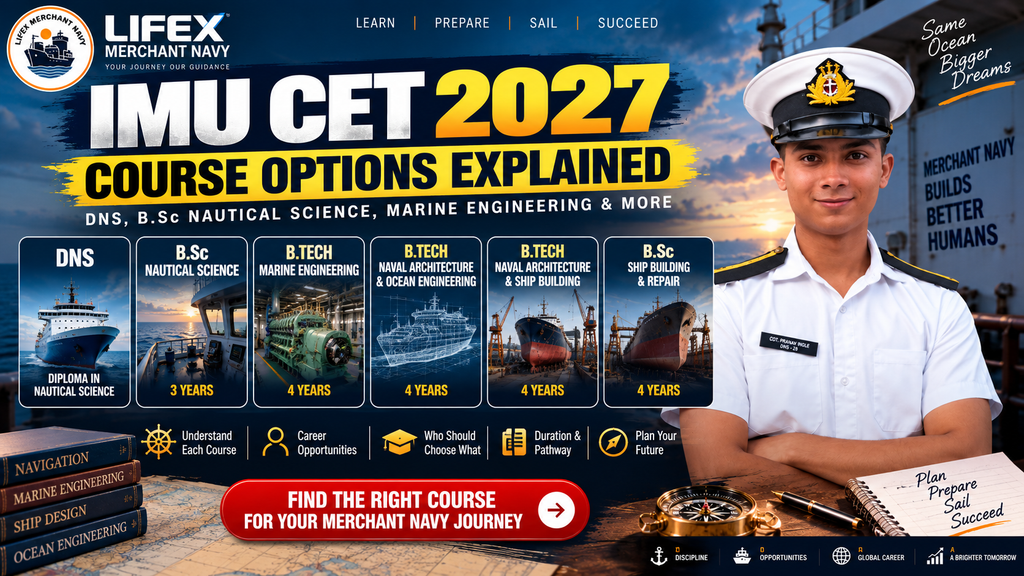
If you’re searching for IMU CET course options, you may already know that IMU CET is an important entrance route for several maritime programmes. But the bigger question is: Which course should you choose after 12th? Should you go for DNS? B.Sc Nautical Science? B.Tech Marine Engineering? Naval Architecture? Ship Building? These courses can lead to very different career paths. Some are designed for students who want to work as deck officers on ships, while others prepare students for marine engineering, ship design, shipbuilding and maritime technical careers. In this guide, we’ll explain the major IMU CET course options after 12th, what each course is about, how long it takes, who should choose it, and how the career path differs. Important: The official IMU CET 2027 prospectus has not been released yet. The course information below is based on the latest official IMU information available for the 2026–27 admission cycle. Final 2027 eligibility, admission rules and course availability should be checked from the official IMU prospectus when released. What Are the Course Options Through IMU CET? For students coming from Class 12 with PCM, the major IMU-related options include: IMU also offers other undergraduate programmes such as BBA programmes in maritime logistics, but students interested specifically in the Merchant Navy sailing route usually focus more on DNS, B.Sc Nautical Science and B.Tech Marine Engineering. So before choosing a course, first decide what kind of career you actually want. Which IMU CET Course Is Best After 12th? There is no single “best” IMU CET course for every student. The right course depends on the career you want. Course Duration Main Career Direction DNS 1 Year Deck Officer / Merchant Navy B.Sc Nautical Science 3 Years Deck Officer / Merchant Navy B.Tech Marine Engineering 4 Years Marine Engineer / Engine Department B.Tech Naval Architecture & Ocean Engineering 4 Years Ship Design / Naval Architecture / Marine Industry B.Tech Naval Architecture & Ship Building 4 Years Ship Design / Shipbuilding / Marine Industry B.Sc Ship Building & Repair 3 Years Shipbuilding & Repair The important thing is that DNS and B.Sc Nautical Science are deck-side programmes, while B.Tech Marine Engineering is an engine-side programme. That difference should be clear before you fill out an application. What Is DNS in Merchant Navy? DNS stands for Diploma in Nautical Science. It is a 1-year residential programme leading to B.Sc. (Applied Nautical Science). IMU describes DNS as a programme covering marine navigation, seamanship and safety management, with the pathway leading towards the examinations required for a Certificate of Competency as a deck officer. For a student who wants to become a deck officer in the Merchant Navy, DNS is one of the major routes to consider. DNS at a glance Duration: 1 year residential programme Field: Nautical Science / Deck Department Focus: Navigation, seamanship, safety and shipboard operations Career direction: Deck Officer Academic route: DNS leading to B.Sc. Applied Nautical Science The DNS route can be attractive to students who want to enter the professional deck pathway through a relatively short academic programme before moving into the required sea-going training and certification pathway. What Is B.Sc Nautical Science? B.Sc Nautical Science is a 3-year residential undergraduate programme designed for students interested in the nautical/deck side of the Merchant Navy. The programme covers areas related to navigation, ship operations, safety and nautical studies. According to the latest IMU prospectus, admission to B.Sc Nautical Science is through IMU CET, and a valid IMU CET rank is required. The latest eligibility criteria include 10+2/equivalent with a minimum 60% average in PCM and at least 50% in English in 10th or 12th, subject to the other applicable conditions. B.Sc Nautical Science at a glance Duration: 3 years Field: Nautical Science / Deck Department Focus: Navigation, ship operations, safety and nautical subjects Career direction: Deck Officer Admission: IMU CET for the applicable admission cycle If you want a degree-based route in Nautical Science rather than the one-year DNS academic route, B.Sc Nautical Science is an option worth understanding. DNS vs B.Sc Nautical Science: What Is the Difference? This is one of the most common questions students ask. Both are connected with the deck side of the Merchant Navy, but their academic structure is different. Feature DNS B.Sc Nautical Science Duration 1 year 3 years Type Diploma leading to B.Sc Applied Nautical Science Degree Department Deck Deck Career Direction Deck Officer Deck Officer Residential Yes Yes IMU CET Applicable Applicable Main Focus Nautical training Nautical degree + training The choice shouldn’t be made simply because one course is shorter. You should consider the complete career pathway, training requirements, institute, sponsorship opportunities and your own long-term plans. What Is B.Tech Marine Engineering? If you don’t want to work in the deck department and are more interested in engines, machinery and technical systems, B.Tech Marine Engineering is the course you should understand. B.Tech Marine Engineering is a 4-year residential undergraduate programme. IMU describes the programme as focusing on marine machinery systems, marine engines, boilers, steam plants, marine simulators and other technical areas. Graduates can pursue careers as marine engineers on Indian and foreign-going ships. B.Tech Marine Engineering at a glance Duration: 4 years Field: Marine Engineering Department: Engine Department Focus: Engines, machinery, electrical/technical systems, maintenance and shipboard engineering Career Direction: Marine Engineer Admission: IMU CET for the applicable admission cycle For students who genuinely enjoy Physics, Mathematics, machines and technical problem-solving, this can be a strong career route. B.Sc Nautical Science vs Marine Engineering This is probably the most important comparison for a student interested in sailing. B.Sc Nautical Science B.Tech Marine Engineering Deck Department Engine Department Navigation-focused Machinery-focused Navigation & ship operations Engines & technical systems Deck Officer pathway Marine Engineer pathway 3 years 4 years More navigation/operations oriented More engineering/technical oriented Think about it this way: B.Sc Nautical Science → You learn how to navigate and operate the ship. Marine Engineering → You learn how the ship’s machinery and engineering systems work and are maintained. Neither is automatically “better.” They are